This article relates to Goal 17: Partnerships for the goals, one of the 17 UN Sustainable Development Goals. Goal icon by the United Nations. Emberoot is not affiliated with, or endorsed by, the UN.
Most of the Sustainable Development Goals describe an outcome: no poverty, clean water, quality education. SDG 17, partnerships for the goals, describes the means. It asks where the money, technology, trade rules, skills and data will come from to reach the other sixteen goals by 2030, and who will work together to deliver them. If you want to understand why progress on the SDGs is uneven, Goal 17 is the place to start.

What SDG 17 covers
The UN’s formal wording is “Strengthen the means of implementation and revitalize the Global Partnership for Sustainable Development”. Behind that sits a long list: 19 targets, more than any other goal. They fall into five groups.
- Finance: domestic tax collection (17.1), aid promises including the 0.7% of national income benchmark for donor countries (17.2), extra money from other sources (17.3), debt sustainability (17.4) and investment in the least developed countries (17.5).
- Technology: cooperation on science and innovation (17.6), spreading environmentally sound technologies (17.7) and a technology bank for the least developed countries (17.8).
- Capacity building: support for countries’ own plans to deliver the goals (17.9).
- Trade: an open, rules-based trading system under the WTO (17.10), more exports from developing countries (17.11) and duty-free, quota-free access for the poorest countries (17.12).
- Systemic issues: policy coherence, partnerships between governments, businesses and civil society (17.16 and 17.17), and better data and statistics (17.18 and 17.19).
The targets are written for governments, but several touch businesses directly. Trade access, investment rules, tax practice and public-private partnerships all depend on how companies behave.
Where the world stands on SDG 17
The picture in 2026 is mixed, and on finance it has got worse. Aid from members of the OECD Development Assistance Committee fell by 23.1% in real terms in 2025, the largest annual drop on record according to preliminary OECD data. ONE’s analysis of the same release puts the total at $174.3 billion, equal to 0.26% of donors’ combined national income, well short of the 0.7% target. Twenty-six of the 34 committee members cut their aid.
Debt is the other pressure. The World Bank’s International Debt Report 2025 found that the external debt of low- and middle-income countries reached a record $8.9 trillion in 2024, and they paid a record $415 billion in interest that year. Between 2022 and 2024 they paid out $741 billion more in principal and interest than they received in new financing.
Against that, the annual SDG investment gap in developing countries is about $4 trillion. That figure framed the Fourth International Conference on Financing for Development in Sevilla (30 June to 3 July 2025), where countries adopted the Sevilla Commitment and launched 130 initiatives, including a debt swaps hub and an alliance for pausing debt payments during crises.
Technology and data are the brighter side. The Sustainable Development Goals Report 2026 notes that internet use rose from 40% of the world’s population in 2015 to 74%. The average Open Data Inventory score passed 50 out of 100 for the first time, and 163 countries had statistical laws in line with the UN’s principles for official statistics in 2025, according to the UN’s Goal 17 progress page.
What is off track
Three things stand out from the UN’s own reporting.
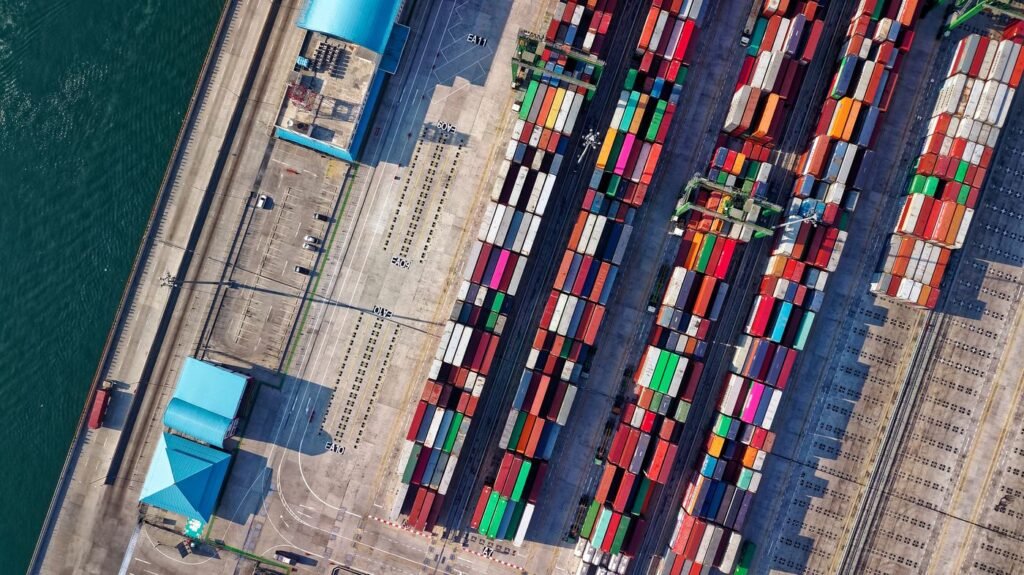
- The trade target was missed. Target 17.11 aimed to double the least developed countries’ share of global exports by 2020. Their share rose from 0.71% in 2005 to just 1.13% in 2024.
- Aid is moving away from 0.7%. With aid at 0.26% of donors’ income in 2025, the gap is widening, and the UN warns that cuts threaten funding for national statistics offices too.
- The digital divide is now about income and place. ITU data for 2025 shows 94% of people in high-income countries online, against 23% in low-income countries, and 85% in towns against 58% in rural areas.
Across all the goals, the 2026 report finds that just over a third of the 139 targets with trend data are on track or making moderate progress, while 49% are moving too slowly and 15% have slipped below their 2015 baselines. The report lists rising debt among the headwinds, alongside the record fall in aid.
Why SDG 17 matters to businesses and people
For a company, Goal 17 is the most practical of the goals because partnership is something you can do this quarter. Paying suppliers on time, sharing skills with local partners, paying tax where you earn and publishing honest data all count. Our guide to Goal 17 actions for business and people lists specific steps, and the Global Goals section shows how this goal links to the others. If you are planning a programme with partners and want a clear scope before you start, our strategy work starts with a free 30-minute call.
Frequently asked questions
What does SDG 17 mean in simple terms?
SDG 17 is about the means to reach all the other goals. It covers money such as tax, aid, investment and debt relief, plus technology, fair trade rules, skills and data. It also asks governments, businesses and civil society to work together, because no single group can deliver the 2030 Agenda alone. It has 19 targets, more than any other goal.
Is SDG 17 on track?
Not overall. Internet access and statistical capacity have improved, but aid from OECD donors fell by a record 23.1% in 2025 and developing countries’ external debt hit $8.9 trillion in 2024. The target to double the least developed countries’ share of world exports by 2020 was missed. The UN SDG Report 2026 tracks these indicators each year.
What is the 0.7% target in SDG 17?
Target 17.2 asks developed countries to meet their aid commitments, including giving 0.7% of their gross national income as official development assistance. In 2025, members of the OECD Development Assistance Committee gave 0.26% of their combined national income, according to preliminary OECD figures reported by ONE. The gap between the promise and the reality grew sharply that year.