This article relates to Goal 17: Partnerships for the goals, one of the 17 UN Sustainable Development Goals. Goal icon by the United Nations. Emberoot is not affiliated with, or endorsed by, the UN.
SDG 17 is a global goal in the most literal sense: it is about how countries work together. Progress on partnerships for the goals looks different depending on where you stand. Some traditional donors are cutting aid, several large developing economies are building their own partnership models, and debt is squeezing budgets across the global South. This article looks at SDG 17 around the world through a few verified examples.
Traditional donors: a record fall in aid
The 34 members of the OECD Development Assistance Committee are the main group of traditional donors. Preliminary OECD data shows their aid fell by 23.1% in real terms in 2025, the largest drop on record. According to ONE, total aid was $174.3 billion, equal to 0.26% of donors’ combined national income, and 26 of the 34 members made cuts. That follows a 6% fall in 2024. The UN says the 2025 fall took aid back to 2015 levels.
Debt across the developing world
For many borrowing countries the bigger issue is what flows out. The World Bank reports that low- and middle-income countries’ external debt reached a record $8.9 trillion in 2024. The 78 mainly low-income countries eligible for the World Bank’s IDA owed a record $1.2 trillion. Interest payments of $415 billion in 2024 competed directly with spending on health and schools.
Spain and Sevilla: a new financing agreement
Spain hosted the Fourth International Conference on Financing for Development in Sevilla from 30 June to 3 July 2025. Countries adopted the Sevilla Commitment, which aims to close a $4 trillion annual SDG financing gap. Among the 130 initiatives launched were a Debt Swaps for Development Hub led by Spain and the World Bank, an alliance to pause debt payments during crises, and a coalition led by France, Kenya and Barbados on taxing premium flights and private jets.
India: partnerships among developing countries
India is both a large economy with development needs and a growing partner to others. In June 2017 it set up the India-UN Development Partnership Fund, managed by the UN Office for South-South Cooperation, with $150 million over a decade including a Commonwealth window. By mid-2019 it had supported 36 projects in 37 countries, from Pacific islands to Chad and Liberia, on areas such as climate resilience, water and maternal health.
During India’s G20 presidency, the New Delhi summit on 9 and 10 September 2023 granted the African Union permanent membership of the G20, giving 55 African states a seat at a table that shapes global finance. India’s own technology also travels: MOSIP, an open-source digital ID platform built at IIIT-Bangalore, has national deployments in the Philippines, Ethiopia and Morocco.
Money moving through families is part of the picture too. The World Bank estimated that remittances to low- and middle-income countries reached $685 billion in 2024, with India the largest recipient at $129 billion.
The UAE: climate finance through investment
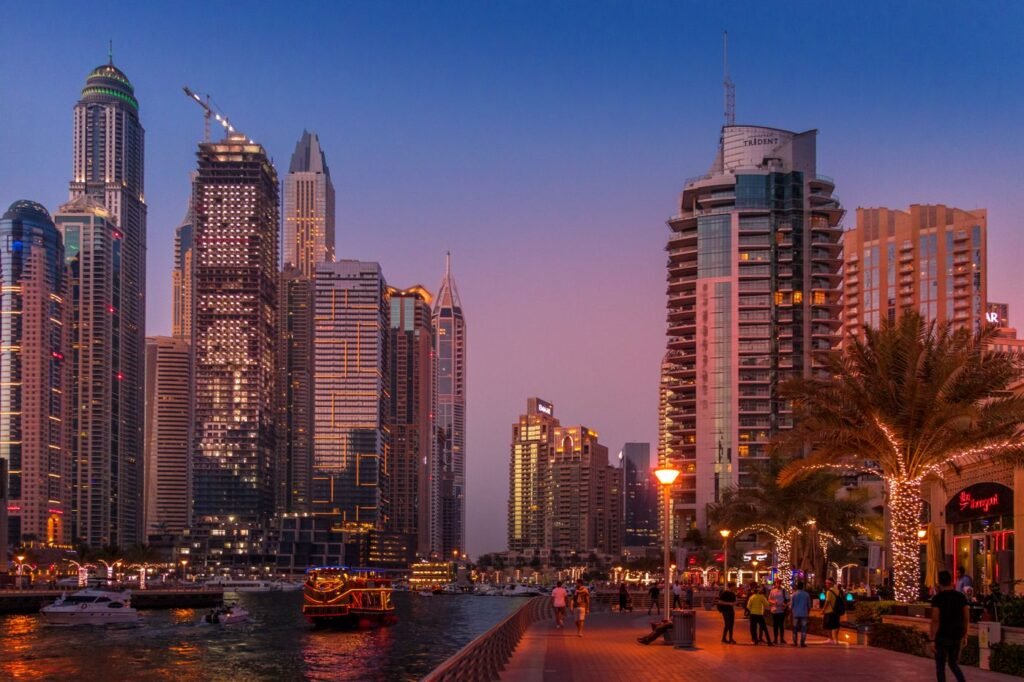
At COP28 in Dubai in December 2023, the UAE committed $30 billion to ALTÉRRA, a climate investment vehicle that aims to mobilise $250 billion globally by 2030, with a focus on emerging markets. BlackRock, Brookfield and TPG were named as launch partners. It is a blended model: public money from one country used to draw in private investors, which is the kind of approach target 17.3 has in mind.
Digital partnerships across regions
The 50-in-5 campaign, launched in November 2023 by eleven countries including Estonia, Senegal, Sierra Leone, Singapore and Sri Lanka, aims to have 50 countries roll out at least one piece of digital public infrastructure by the end of 2028. Its first movers span Africa, Asia, Europe and Latin America, from Guatemala to Moldova.
What the comparison shows
No single model is replacing traditional aid. South-South funds are small next to the debt payments developing countries make, and blended finance tends to go to projects that can repay investors. The UN’s SDG Report 2026 finds only just over a third of tracked targets on track or making moderate progress. For businesses working across borders, the lesson is to understand which kind of partner you are dealing with and what it can and cannot fund. Our strategy service helps founders plan market entry with that in view. See the Goal 17 page and the Global Goals hub for more.
Frequently asked questions
Which countries meet the 0.7% aid target?
The OECD publishes each donor’s aid as a share of its gross national income, so its latest official development assistance data is the place to check the current list. Preliminary figures are revised later. As a group, members of the OECD Development Assistance Committee gave 0.26% of their combined national income in 2025, well short of the 0.7% benchmark in target 17.2.
What is South-South cooperation?
South-South cooperation means developing countries sharing money, knowledge, technology and skills with each other, rather than relying only on traditional donors. The India-UN Development Partnership Fund, set up in 2017 and managed by the UN Office for South-South Cooperation, is one example. It complements traditional aid and is explicitly mentioned in Goal 17’s targets on technology and capacity building.
What was agreed in Sevilla in 2025?
At the Fourth International Conference on Financing for Development, held in Sevilla from 30 June to 3 July 2025, countries adopted the Sevilla Commitment. It aims to close a $4 trillion annual SDG financing gap. 130 initiatives were launched, covering debt swaps, pausing debt payments during crises, taxing premium flights and local currency lending.