This article relates to Goal 14: Life below water, one of the 17 UN Sustainable Development Goals. Goal icon by the United Nations. Emberoot is not affiliated with, or endorsed by, the UN.
Ocean protection around the world runs on several levels at once. Global treaties set rules for the high seas and fishing subsidies. Regions differ sharply in how much they earn from sustainable fishing. Countries such as India and the UAE are using plastic bans and mangrove planting to tackle problems along their own coasts. This article compares progress on SDG 14, life below water, using verified UN and government sources.
Global rules for SDG 14 life below water
The past year brought two landmark treaties into force. According to the UN Sustainable Development Goals Report 2026, the WTO Agreement on Fisheries Subsidies took effect on 15 September 2025, with 120 members having accepted it, and the BBNJ Agreement on high seas biodiversity entered into force on 17 January 2026, with 89 parties by 1 June 2026. The high seas make up about two-thirds of the ocean, yet only 1.66% of those waters is protected.
Overall, 10.01% of the ocean was protected or conserved in April 2026, with about 5 million square kilometres newly protected since 2024. The global target for 2030 is 30%. The UN oceans page notes that the June 2025 UN Ocean Conference produced more than 800 voluntary commitments.
Regions: who gains from sustainable fishing
Target 14.7 tracks how much sustainable fisheries add to the economy, measured as a share of GDP. The 2026 report shows a mixed picture between 2021 and 2023:
- Small island developing states: down from 0.57% to 0.52%.
- Least developed countries: down slightly from 0.75% to 0.73%.
- South-Eastern Asia: down from 0.61% to 0.59%.
- Sub-Saharan Africa: up from 0.39% to 0.43%, the only region to grow.
- Europe and Northern America: around 0.03%.
The figures show where the stakes are highest. For small islands and many African and Asian coastal countries, fish is food and income. For Europe and North America it is a small slice of a large economy. Globally, sustainable fisheries fell to 0.08% of GDP in 2023, a 7% drop since 2021.
India: plastic rules and coastal livelihoods
One of India’s levers on target 14.1 is plastic regulation. From 1 July 2022, the country banned a list of single-use plastic items, including plates, cups, straws, cutlery, stirrers and some wrapping films, under the Plastic Waste Management Amendment Rules 2021, and carry bags thinner than 120 microns were banned from 31 December 2022, according to the Press Information Bureau. A list of banned items only works with enforcement, so the rules on paper are the start, not the finish.
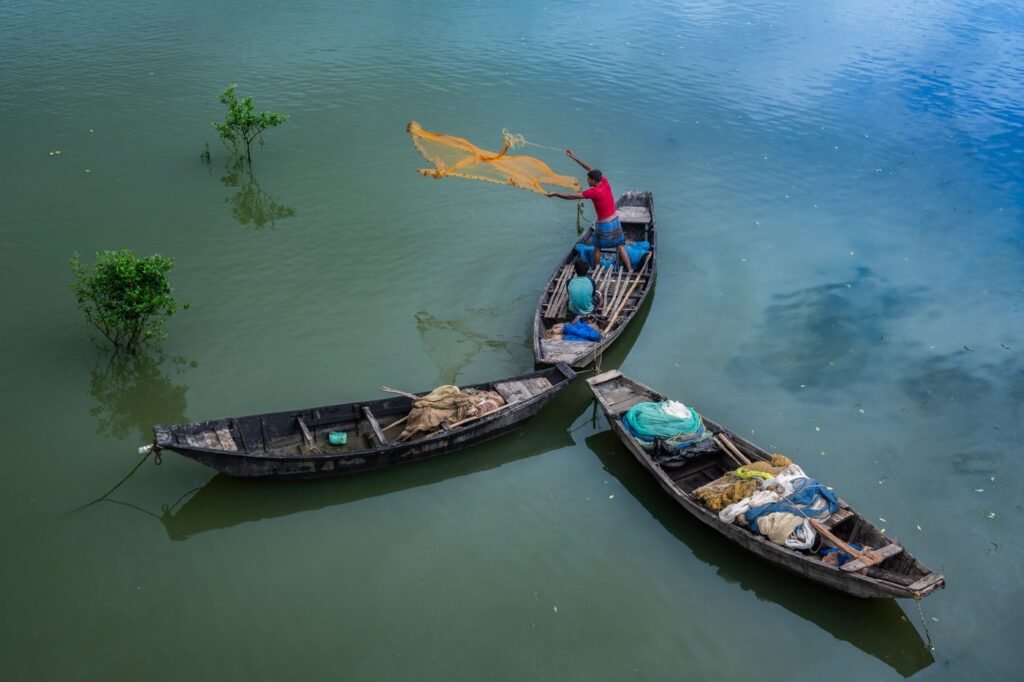
India also has long coastlines on the Arabian Sea and the Bay of Bengal, where small-scale fishers, the group target 14.b is written for, depend directly on healthy waters.
UAE: plastic bans and 100 million mangroves
The UAE has moved in phases. Under Ministerial Decision No. 380 of 2022, single-use plastic shopping bags were banned from 1 January 2024, and a second phase from 1 January 2026 added cups and lids, cutlery, plates, straws, stirrers and polystyrene food containers, as Gulf News sets out.
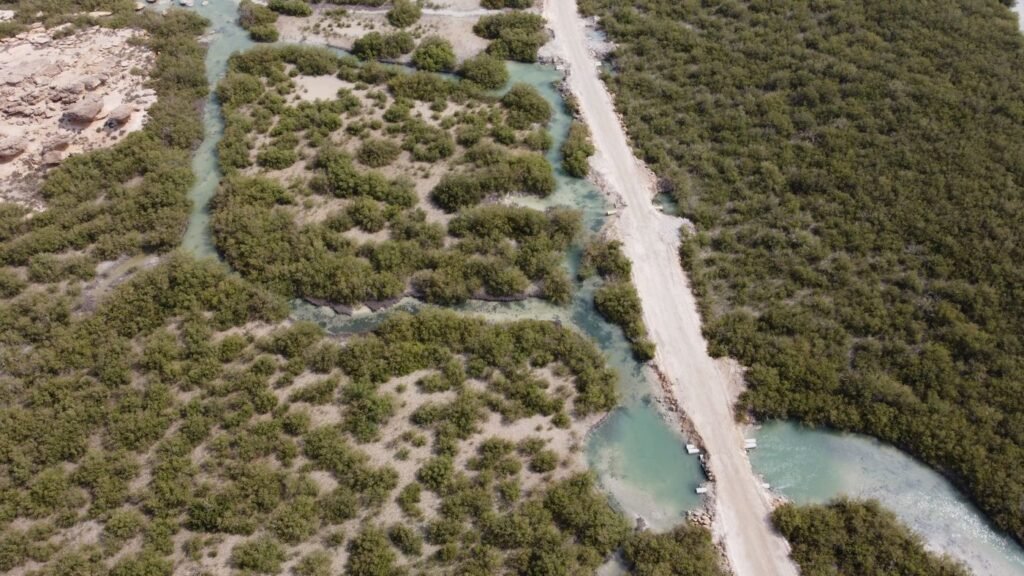
On the coast itself, the UAE aims to plant 100 million mangroves by 2030. In August 2026, Gulf News reported that 51% of that target had been reached, citing the Ministry of Climate Change and Environment. Mangroves shelter young fish, filter water and store carbon, so they serve Goal 14 and climate goals together.
Coral reefs: a shared global loss
Coral reefs show that national action has limits. The fourth global coral bleaching event, which likely ended in mid-2025, affected 84% of reefs across 83 countries and territories, according to NOAA data cited in the UN’s 2026 report. The cause is ocean warming, which no single coastal country can stop. Local action still matters for the pressures coastal governments can control, such as pollution and fishing.
The common thread across these cases is that global treaties set the frame, but results depend on enforcement at ports, on beaches and in local markets. For targets and data in one place, see our Goal 14 page and the wider Global Goals hub. Organisations working on coastal projects can talk to us about strategy.
Frequently asked questions
Which countries are doing most to protect the ocean?
Progress is spread across many countries rather than led by one. Globally, 120 WTO members have accepted the fisheries subsidies agreement and 89 countries had joined the High Seas Treaty by June 2026. Nationally, measures such as India’s 2022 plastic ban and the UAE’s phased plastic bans and mangrove planting tackle coastal problems directly.
What has the UAE done for life below water?
The UAE banned single-use plastic bags from 1 January 2024 and added cups, lids, cutlery, plates, straws, stirrers and polystyrene food containers from 1 January 2026. It also aims to plant 100 million mangroves by 2030, and reported reaching 51% of that target in August 2026.
How much of the ocean is protected?
About 10.01% of the ocean was officially protected or conserved in April 2026, according to the UN. The global target is 30% by 2030. On the high seas, beyond any country’s waters, only 1.66% is protected, which the new High Seas Treaty is designed to change.
This article is general information, not legal or professional advice.