
Selling internationally on Shopify is mostly a settings job until the first parcel gets stuck at customs. The platform gives you tools to show local prices, translated pages and duties at checkout, but each tool has requirements, and some depend on where your business is registered. This guide walks through the parts in the order a small brand usually meets them, with links to Shopify’s help centre for the details, which change often. Everything here was checked against Shopify’s documentation in October 2026.

Markets: decide where you are selling internationally on Shopify
Shopify’s international selling tools start with markets: you create a market for a country or a group of countries, then set its language, currency, pricing and shipping. Start small. One or two markets where you already see visits or enquiries will teach you more than switching on fifty countries at once and finding that shipping to half of them costs more than the product.
Say a ceramics brand based in the UK sees steady traffic from the UAE and the US. Two markets beyond the home market is a sensible first step: enough to learn how duties and returns work, few enough to manage by hand.
Domains and languages
Each market needs an address. Shopify’s international domains guide offers three options: subfolders on your main domain (example.com/en-ae), subdomains (ae.example.com) or separate country domains (example.ae). For a first setup it recommends subfolders, because they need little configuration and share your main domain’s search strength. Shopify creates hreflang tags automatically for each international domain or subfolder, which tells search engines which version to show in which country. International domains are available on the Basic plan or higher.
For languages, stores on the standard plans can sell in up to 20 languages, and Plus stores up to 30, according to Shopify’s translation documentation. Checkout comes pre-translated in 33 languages, but the rest of your content needs translations from you, a translator or an app such as Shopify’s Translate & Adapt. Machine translation of product descriptions is a starting point; have a native speaker read the pages that sell.
Currencies and local pricing
Local currency pricing lets shoppers see prices, pay and receive refunds in their own currency. Prices convert at the market rate by default, and you can round them or adjust them by percentage for each market. Shopify’s pricing guide says only stores using Shopify Payments, with access to one-page checkout, get all of this functionality.
That requirement matters for founders in India. As of October 2026, Shopify Payments is not available in India (it is available in the UAE, the UK, the US and a list of other countries), so an India-registered store selling abroad should check which multi-currency features its payment provider supports before promising local prices.
Duties and import taxes at checkout
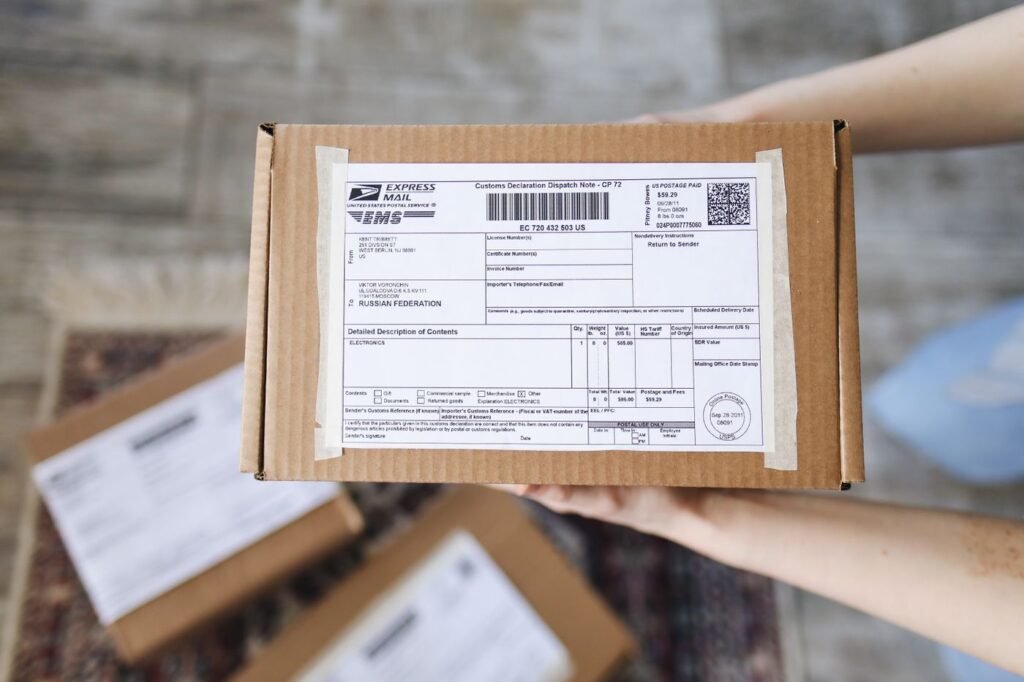
When a parcel crosses a border, the buyer may owe duties and import taxes. If you don’t collect them at checkout, the customer pays on delivery, and a surprise bill at the door can end in a refused parcel and a lost customer. Shopify can estimate and charge duties at checkout. The requirements include Harmonized System (HS) codes on your products, a shipping carrier that supports DDP (delivered duty paid) labels if you buy labels through Shopify, and not using Shopify Fulfillment Network. Shopify also recommends adding each product’s country of origin, since duties are calculated from both.
There is a fee on each order where duties are calculated. Shopify’s page lists a standard rate that is lower with Shopify Payments than with other gateways, and a temporary reduced rate that has applied since February 2025. Check the current figure before you switch it on.
Get HS codes right before you collect duties. A wrong code means a wrong estimate, and the customer may still face a bill on delivery.
Tax registration and Managed Markets
Collecting duties is separate from your own tax obligations. Depending on the country, the goods and your sales volume, you may need to register for VAT, GST or sales tax in places where you have no office. The rules differ widely between the EU, the UK, the UAE, Australia and others, so take local advice for each market you add.
Some merchants can hand much of this to Shopify Managed Markets, powered by Global-e, which acts as merchant of record: it remits tax to local authorities, provides the registrations you would otherwise need and manages duties. As of October 2026 it is available only to merchants based in the continental US and to certain stores in Canada and the UK.
If you want help planning which markets to open first and what that means for pricing, our strategy work covers market entry, and our store builds handle the Shopify setup itself.
Frequently asked questions
Do I need a separate Shopify store for each country?
Usually not. Shopify’s markets let one store serve several countries with their own language, currency, pricing and domain or subfolder. Separate stores make sense when local teams run each region independently, or when sales and payouts must sit in different currencies or legal entities. Start with one store and markets unless you have a clear operational reason to split.
Can an Indian Shopify store show prices in other currencies?
Shopify says full local currency pricing needs Shopify Payments, which is not available in India as of October 2026. Indian stores use third-party payment providers, so check which currencies your provider can charge and settle in. Showing converted prices that the checkout then charges in rupees can confuse buyers, so test the full flow before launching abroad.
What is an HS code and why does Shopify need it?
A Harmonized System code is an internationally used number that classifies a product for customs. Duty rates are set by code and by country of origin, so Shopify needs both to estimate duties at checkout. Your customs broker, courier or national customs authority can help you find the right code for each product.
This article is general information, not tax, legal or customs advice. Check the rules for each country with a qualified adviser.