This article relates to Goal 9: Industry, innovation and infrastructure, one of the 17 UN Sustainable Development Goals. Goal icon by the United Nations. Emberoot is not affiliated with, or endorsed by, the UN.
Digital tools help SDG 9 in two ways. They are infrastructure in their own right, since target 9.c is about internet access, and they make physical infrastructure and industry work better through data, mapping and shared systems. This article looks at technology and SDG 9 through public programmes and open-source projects you can check, and it is clear about where software helps little.
Technology and SDG 9: what counts as digital infrastructure
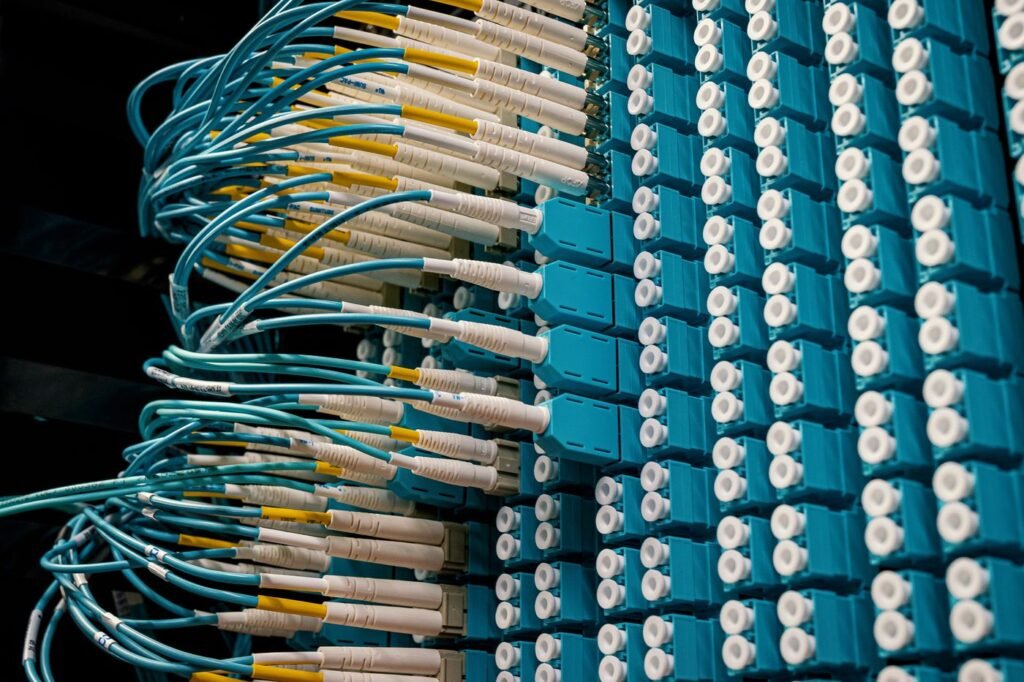
Digital infrastructure is the layer of networks and shared systems that other services run on. Mobile networks and fibre are the base. On top sit shared platforms such as payment systems, identity systems and data exchange between government agencies. Then come the services people use. When the lower layers are missing or unreliable, the apps above them fail.
Five real examples
Connectivity mapping for schools: Giga
Giga is a joint initiative of UNICEF and the ITU that maps schools and their internet connections so governments and providers can plan where to connect next. Its 2025 report describes engagement with 47 countries and territories, and says more than 700 schools in Botswana are connected, reaching over 400,000 learners. The data side is cheap compared with the cost of laying fibre or building masts, but it means the money goes where the gaps are.
Data exchange between agencies: X-Road
X-Road is free, open-source software for secure data exchange between organisations, first used in Estonia and maintained with the Nordic Institute for Interoperability Solutions. Its published case studies include Finland, Iceland, Brazil, Kyrgyzstan, Cambodia and Colombia. Shared plumbing like this lets a government add services without building a new connection between every pair of systems.
Instant payments at national scale: UPI
India’s Unified Payments Interface processed a record 23.66 billion transactions in July 2026, according to the Government of India, which also cites IMF figures putting UPI at about 49% of the world’s real-time payment volume in 2025. For small firms, cheap instant payments reduce the cost of selling and give them a transaction history that can support a loan application, which links back to target 9.3.
Open maps for planning and disasters: HOT
The Humanitarian OpenStreetMap Team coordinates volunteers who map roads, buildings and services in open data, and works in 94 countries. Planners and responders use these maps where official ones are missing or out of date. Anyone with a laptop can contribute, which makes it one of the easier ways to help on SDG 9.
Sensors and data in industry
In factories, cheap sensors and simple dashboards can show energy use by machine and flag equipment that is about to fail. That supports target 9.4 on resource efficiency. The gains depend on someone acting on the data: a dashboard nobody reads saves nothing.
Where software does not help much
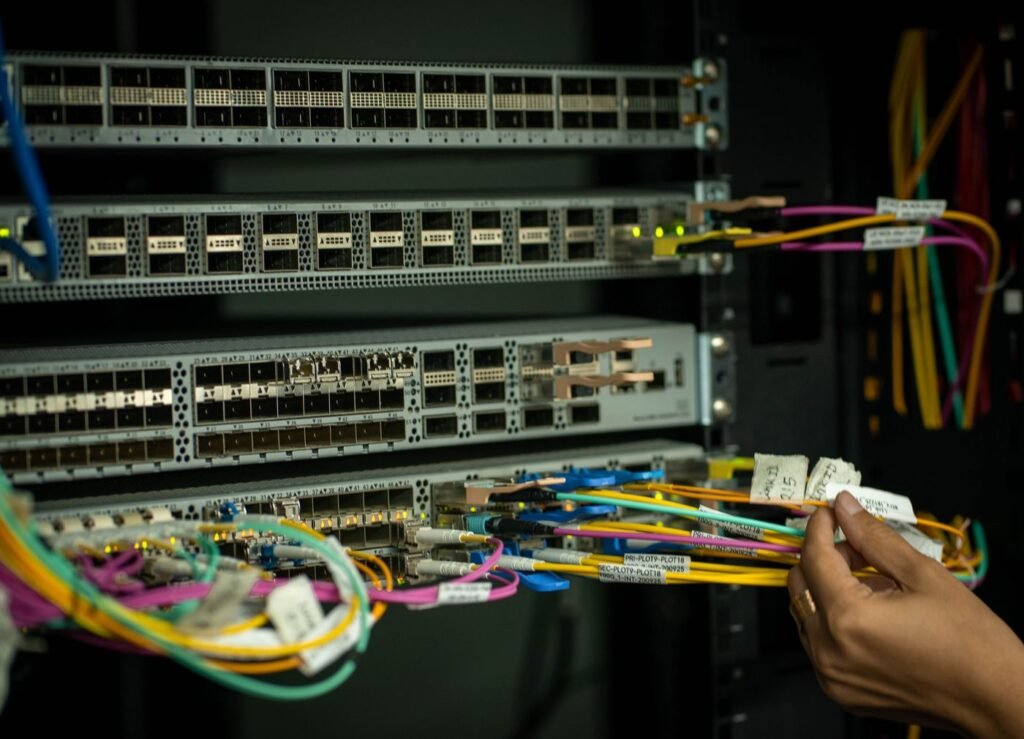
Technology cannot replace the physical network. The UN SDG Report 2026 shows 5G covering 84% of people in high-income countries and 4% in low-income countries, and 12% of people in the least developed countries had no mobile broadband signal at all in 2025. No app fixes a missing mast. Affordability is the other limit: the ITU says mobile broadband is still unaffordable in about 60% of low and middle-income countries.
There are other risks. Shared platforms concentrate data, so privacy and security have to be designed in. Systems built without local maintenance skills tend to decay. And AI models trained on data from rich countries may work poorly where data is thin, which is often where the need is greatest.
Before building a new platform, check whether an open-source digital public good already does the job. Reusing X-Road, OpenStreetMap or similar projects is often cheaper and easier to maintain than starting from scratch.
What this means for a business building digital products
If you are building software that touches infrastructure or industry, design for the networks people have. Keep pages light, cache what you can, and allow for patchy connections. Use open standards so your product can plug into shared platforms. Our SaaS and web app work and technology advice start from these constraints. For the wider context, see the SDG 9 goal page and the full set of Global Goals.
Frequently asked questions
How does technology help achieve SDG 9?
Technology helps in two ways. Networks such as mobile broadband are themselves part of SDG 9 through target 9.c. Software and data also make physical infrastructure and industry work better, for example by mapping where schools lack internet, letting agencies share data securely, enabling cheap payments for small firms, and showing factories where they waste energy.
What are digital public goods in SDG 9?
Digital public goods are open-source software, open data and open standards that anyone can reuse, adapt and deploy. X-Road, a data exchange system first used in Estonia, is one example. Because they are reusable, they let countries and organisations build shared digital infrastructure without paying licence fees or rebuilding the same systems from scratch.
What are the limits of technology for SDG 9?
Software cannot replace masts, cables or power. The UN SDG Report 2026 shows 12% of people in the least developed countries had no mobile broadband signal in 2025, and the ITU finds mobile broadband unaffordable in about 60% of low and middle-income countries. Privacy, security and local maintenance skills also limit what digital tools can achieve.